
An art preparatory program is not a waiting room for the Fine Arts. For an increasing number of students, this year serves as a laboratory where professional trajectories are tested that have nothing to do with the traditional academic curriculum: independent game design, monetized content creation, art direction for video game studios, or generative design related to AI.
The qualitative study “Creative Trajectories 2025-2026” by France Compétences confirms a notable acceleration of art preparatory alumni launching hybrid art and tech careers since 2024.
Art preparatory and hybrid skills: the technical foundation that schools do not provide
Most higher education programs in art segment early. A graphic design student rarely touches on 3D modeling, and an animation student seldom manipulates creative code. The art preparatory program, because it imposes a rapid rotation between disciplines, produces a profile that we qualify as hybrid: drawing, video, digital creation, spatial architecture, prototyping.
This mixing is not a superficial overview. It builds a cross-disciplinary visual grammar that becomes a direct competitive advantage in the market for non-academic creative professions. An independent game designer must master concept art, understand level design, and know how to present a funding proposal. These skills are rarely acquired in a single specialized curriculum.
The preparatory year also allows for testing a professional project without a three to five-year commitment in an expensive school. It is a framework where one can pivot quickly, abandon one path, explore another, without consequences on a diploma. For those looking to find their way through an art preparatory program, this flexibility changes the game compared to direct enrollment in a school.
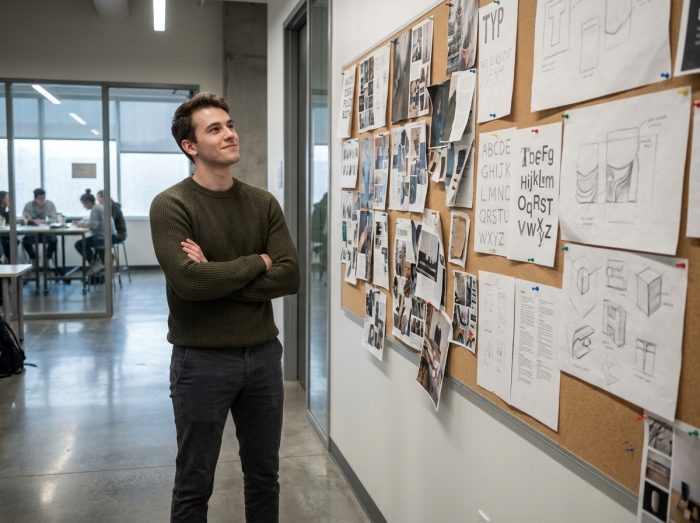
Independent game design and content creation: two underestimated career paths after a preparatory year
The classic reflex is to evaluate an art preparatory program by its admission rate into higher schools. This criterion ignores a reality: a significant fraction of students no longer aims for an art school diploma. Their goal is to launch an independent creative project, often by the end of the preparatory year or shortly thereafter.
Independent game design
The development of independent video games relies on profiles capable of combining art direction, visual storytelling, and prototyping. The art preparatory program provides the foundations in drawing, composition, and digital creation. A student who leaves this year with a solid concept art portfolio and a first playable demo has a real advantage when pitching to publishers or launching a crowdfunding campaign.
Monetized content creation
Visual content creation has become a full-fledged profession, not a hobby. Video platforms, social media, and design marketplaces pay creators capable of producing regular content with a recognizable graphic identity. The art preparatory program, by structuring the gaze and diversifying techniques (video, illustration, digital design), directly prepares for this production requirement.
We observe that students who document their preparatory year on social networks build a public portfolio in real-time. This portfolio becomes their first professional tool, sometimes even before finishing the year.
Artistic portfolio and personal projects: what distinguishes a professionally oriented art preparatory program
Not all art preparatory programs are equal in this regard. The difference lies in a specific point: the importance given to personal projects in the artistic portfolio.
In a classic scheme, the portfolio serves to enter a school. Guided exercises occupy most of the time, and personal projects remain marginal. In a preparatory program oriented towards creative professional integration, the ratio is reversed. Personal projects structure the year, and technical exercises come in support.
- A short animated film project carried out from writing to editing, with a shareable output, weighs more than a series of academic sketches for a studio recruiter
- A video game prototype, even rudimentary, demonstrates the ability to carry a project from conception to delivery, a sought-after skill in game design
- A coherent visual feed on a social platform, maintained over several months, proves regularity of production and an editorial vision, two central qualities in content creation
The artistic portfolio is no longer just a passport for competitions. It becomes an immediately usable professional portfolio.
NFT design and generative AI: the art preparatory program facing new creative professions
The study by France Compétences mentions an increase in hybrid art and tech pathways among former art preparatory students, with a marked acceleration since 2024. NFT design and the creative use of generative AI are among the most cited trajectories.
These professions do not exist in any traditional training reference. No art school awards a diploma for “prompt designer” or “NFT artist.” The art preparatory program, through its open structure, allows the integration of these emerging practices into student projects without waiting for an official program to recognize them.
Free experimentation remains the best incubator for professions that do not yet have an RNCP sheet. A student who dedicates part of their preparatory year to exploring AI-generated images, understanding the associated intellectual property issues, and producing sellable pieces on a marketplace acquires directly monetizable skills.

We recommend checking, before choosing a preparatory training program, whether the teaching team includes professionals from these new fields. An instructor who practices generative design or has sold digital creations brings experience that no lecture can replace.
The art preparatory program, in its most relevant version, does not prepare for a competition. It prepares for a market. And this market today values both a portfolio of concrete projects and a diploma framed by a recognized school.