Between the 1970s and 2026, demographics, work, technology and family life have undergone profound changes—sometimes less dramatic than the geopolitical crises that dominate comparisons between decades.
Demographics and life expectancy: ageing differently in 2026
In the 1970s, France had a significantly smaller share of people aged 65 and over than it does today. This ageing population is changing household composition, the number of family caregivers and the pressure on health services.
Comparing the 1970s and 2026 based on longevity alone would be misleading. Insee distinguishes between life expectancy and healthy life expectancy, and the latter has not increased at the same pace. Living longer does not guarantee spending all those extra years free from disability.
The consequences are tangible: careers are getting longer, successive pension reforms have raised the statutory retirement age, and intergenerational support (helping ageing parents, multigenerational living) plays a greater role than it did in households in the 1970s.

Women at work and income inequality: progress, but not enough
In the 1970s, women’s participation in the labour market was far lower than in 2026. The female activity rate has risen sharply over this period, bringing the male and female rates closer together.
Women employees are still far more likely than men to work part-time. Insee attributes part of the income gap between women and men to the number of hours worked each year, particularly the use of part-time work and women’s lower likelihood of being in employment throughout the year. So the issue is not just hourly pay, but also how working hours are structured.
Everyday life has changed as a result:
- Households have shifted towards a dual-income model, making childcare and school schedules more important than they were for single-income families.
- Care and education jobs, which were overwhelmingly held by women in the 1970s, remain largely female-dominated today, despite policies promoting gender balance.
- For single women, access to a mortgage—almost impossible in the 1970s without a male guarantor—has become legally routine, though wealth gaps remain.
Everyday technology: more than just gadgets
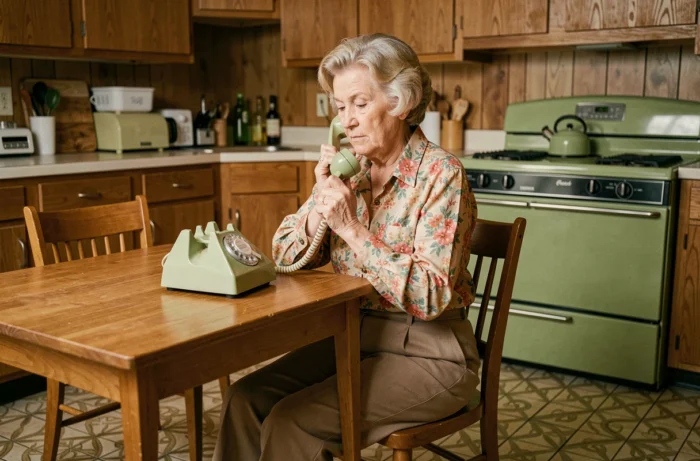
The usual shortcut is to list the things that have disappeared (rotary phones, Minitel, audio cassettes) alongside those that have arrived (smartphones, streaming, artificial intelligence). This catalogue obscures a more fundamental shift: technology has changed our relationship with time far more than our relationship with objects.
In the 1970s, sending a letter meant waiting several days. Checking a bank balance required a trip to a branch. Booking a train ticket meant going to a physical ticket office. Each of these tasks took time, but that time was not seen as wasted because there was no faster alternative.
In 2026, those same tasks take just a few seconds. The time saved adds up considerably. But some of it is taken up by new tasks: managing passwords, sorting notifications, updating apps and protecting personal data. Some of the time saved by technology has been redirected towards maintaining that very technology.
Energy and consumption: different trade-offs
In the 1970s, dependence on oil shaped economic debates. In 2026, energy remains a central issue, but the focus has shifted: dependence is less about oil alone and more about a range of resources (gas, rare metals and electricity for data centres).
Housing costs clearly illustrate the difference in trade-offs between the two eras. So-called unavoidable expenses (housing, energy and insurance) have risen since the 1970s, leaving less room in household budgets for other spending.
Culture and social connections: what the figures can’t measure
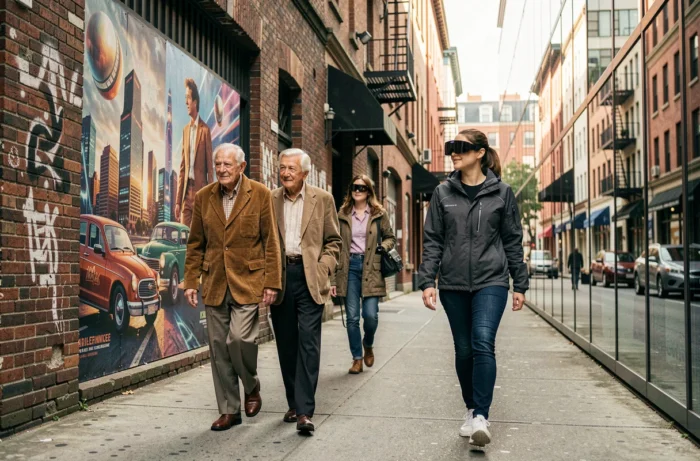
Comparisons between eras have a blind spot: changes in social connections are not captured by economic statistics. In the 1970s, social life revolved around neighbours, local associations and street parties. Social media did not exist, which is not to say that people were never isolated, but isolation took different forms.
In 2026, the number of daily contacts has soared, but their nature has changed. Short written exchanges have replaced some face-to-face conversations. The very idea of “community” has fragmented into themed online circles, some highly active, others short-lived.
There is not enough data to determine whether people in France in 2026 feel more or less connected to those around them than people did in 1975. Insee surveys on living conditions did not cover the same aspects of social relationships fifty years apart, making direct comparisons unreliable.
What has changed between the 1970s and 2026 cannot be reduced to a list of inventions or a story of decline. Demographics, women’s employment, spending patterns and our relationship with time are part of a set of quiet transformations—less newsworthy than crises, but more enduring in their impact on everyday life.