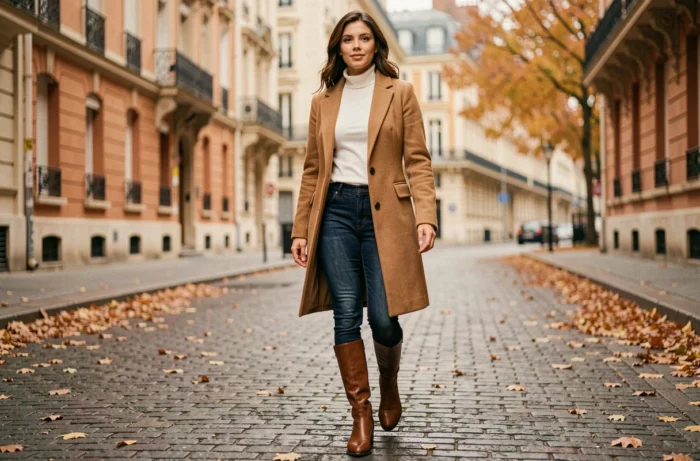
A trench coat bought three years ago, worn every transitional season, with a button that’s been sewn back on and holds better than the original: a piece like that says more about your style than a jacket bought on impulse at the start of the season.
Expressing your style in every season starts with choosing clothes you keep, repair and style differently from one month to the next. Fashion trends come and go, but a wardrobe built around a few well-made pieces moves effortlessly through the seasons.
Textile repair bonus: extend the life of your clothes instead of replacing them
We all have a pair of trousers with a split inner seam or a leather jacket with a torn lining. The usual response is to put the item at the back of the wardrobe. Since November 2023, the textile repair bonus has offered an instant discount at certified repair shops in France.
The range of eligible repairs varies, so it’s best to check before dropping off a garment. Eligible work includes sewing, replacing zippers and repairing linings. For a wardrobe designed to last, this changes the way you think: instead of buying a new item every time something gets damaged, you can repair the one you already wear. A well-tailored wool pair of trousers will keep its shape and drape for several more seasons.
To explore trends and find inspiration before sorting through your wardrobe, visit https://www.modefashion.net, which features the latest pieces and styles.
A four-season wardrobe: pieces that aren’t tied to micro-trends

Building a personal style that works all year comes down to one simple principle: invest in pieces you can wear for at least three out of four seasons. A mid-season jacket in heavyweight cotton works from spring through autumn. Straight-leg trousers in lightweight wool can take you from the office to dinner, from September to April.
Micro-trends—a very specific colour, an extreme cut or a viral print—have a short lifespan. They’re everywhere for two months, then disappear. There’s nothing wrong with trying one now and then, but they shouldn’t form the foundation of your wardrobe.
Pieces that move through the seasons without going out of style
- A trench coat or structured cotton jacket in a neutral colour (beige, navy or khaki), which adapts to changing temperatures when layered over a lightweight sweater or T-shirt
- Straight-leg trousers in a wool blend or heavyweight cotton, worn with ankle boots in winter and loafers in spring, with a classic cut that isn’t tied to any trend
- A pair of leather shoes, regularly cared for with polish and resoling, that gain character over time instead of wearing badly
- A dress in a fluid fabric, worn on its own in summer, under a knit sweater in autumn and with opaque tights in winter
What these pieces have in common is that they work together effortlessly. You don’t need to rethink your entire outfit to add a new item. Each addition complements what you already own.
Second-hand and vintage pieces: an underrated way to develop your style
Sales of second-hand clothing, shoes and household linen in France increased between 2024 and 2025, according to Refashion data reported by Businesscoot. This is no longer a niche market reserved for vintage enthusiasts. Mainstream retailers now offer their own resale channels.
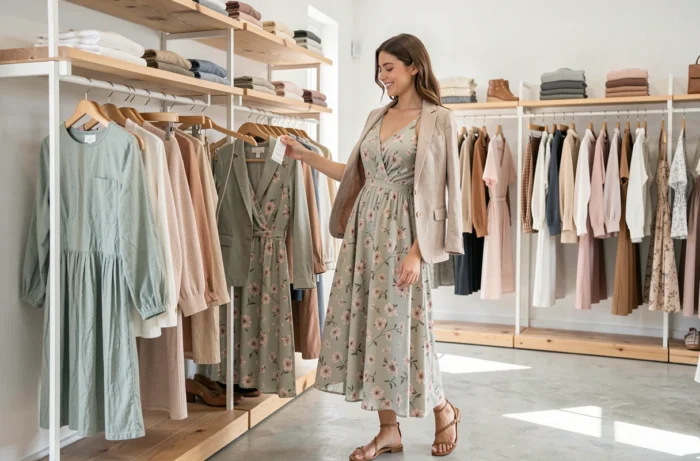
Second-hand shopping offers a practical advantage when it comes to expressing your personal style: access to cuts and fabrics you can no longer find in stores. A 1990s wool blazer often has a weight and finish that entry-level new pieces can’t match. A vintage leather jacket already has a patina, giving it instant character.
The idea isn’t to build a wardrobe made up entirely of second-hand clothes, but to mix carefully chosen new pieces with pre-loved finds. An autumn look might pair a new ribbed-knit sweater with trousers picked up at a thrift store and a pair of resoled ankle boots. It’s the colours and proportions—not where each item comes from—that make the outfit cohesive.
European regulations and the end of unsold stock: what it means for consumers
The European Union now prohibits the destruction of unsold clothing. This measure is encouraging brands to adjust production volumes or arrange for their stock to be redistributed. For consumers, that means outlet and second-hand channels are set to grow.
At the same time, the European Commission plans to introduce ecodesign requirements specifically for textiles and clothing, with adoption tentatively scheduled for 2027. The exact criteria have not yet been defined. However, we know that material durability and the repairability of garments will be among the areas addressed. The message is clear: investing in clothes designed to last is no longer just an aesthetic choice—it’s a direction that regulations will reinforce.
Adapting your fashion purchases to this shift
Before buying something, ask yourself three quick questions: Will I still wear it next season? Is it easy to repair if it gets damaged? Does it go with at least three outfits already in my wardrobe?
If the answer to all three is yes, the item is probably worth the price. If the answer to two of them is no, it’s better to pass, whatever the current trend.
A wardrobe that expresses your style in every season isn’t built in a single shopping trip. It takes time to accumulate pieces you’ve tried and worn, sometimes repaired, and sometimes resold when they no longer suit you. The most sustainable fashion is the fashion you actually wear.