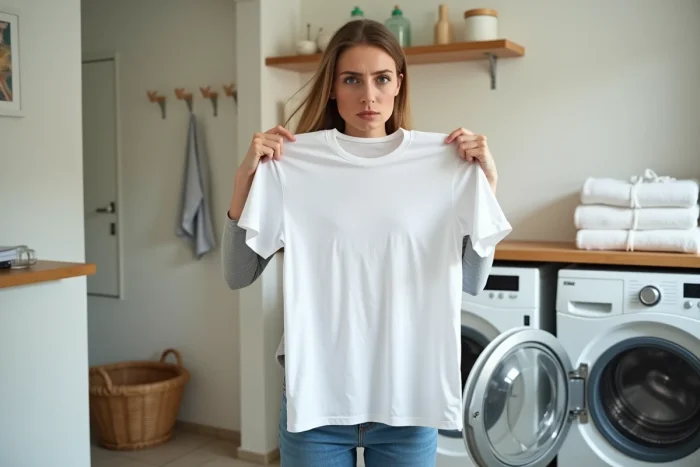
A t-shirt washed the day before that emits a rancid smell as soon as it’s worn for a few minutes: the problem affects both sportswear and everyday shirts. The main cause lies at the microscopic level, in the interaction between skin bacteria, sweat, and the structure of textile fibers. Understanding this mechanism allows for the selection of truly effective solutions rather than multiplying wash cycles without results.
Why synthetic fibers trap sweat odors
The work of Callewaert’s team at Ghent University (2014, published in Applied and Environmental Microbiology) highlighted a specific phenomenon: malodorous compounds adsorb into the matrix of synthetic fibers such as polyester and elastane. These highly hydrophobic fibers retain odor molecules within their structure, where conventional detergents struggle to act.
Cotton and wool, being more hydrophilic, release these compounds much more easily during washing. Therefore, it is not a matter of personal cleanliness or ineffective detergent: it is the very nature of the fabric that promotes the persistence of odors after a wash cycle.
An aggravating factor has emerged in recent years. Several sportswear manufacturers have reduced antibacterial treatments based on silver or zinc, under pressure from environmental concerns documented by the European Chemicals Agency (ECHA) and the Swedish Chemicals Agency.
Some recent sportswear retains odors more than previous generations that were treated more aggressively. Field reports vary on the actual extent of this decline, but the trend is confirmed by reports published between 2020 and 2023.
When trying to understand the smell of sweat on clothes after washing, this interaction between bacteria, synthetic fibers, and the reduction of biocide treatments forms the basis of the problem.
Enzymatic pre-soaking: the most effective method according to tests
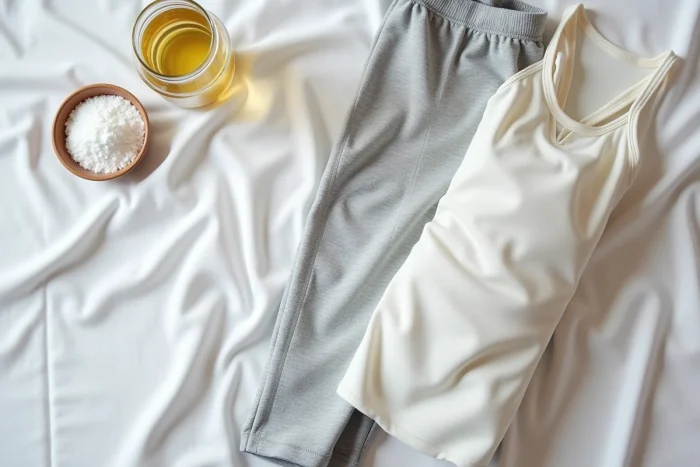
The competitors of this article often recommend white vinegar, baking soda, or the freezer. These solutions have a partial effect, but comparative tests conducted by independent consumer organizations point to another approach: long pre-soaking in an alkaline solution containing enzymatic surfactants.
Specifically, it involves letting the garment soak for at least an hour in warm water mixed with an enzymatic detergent (containing proteases or lipases). These enzymes break down organic residues trapped in the fibers, including fatty acids and proteins that serve as a substrate for odor-producing bacteria.
What differentiates enzymatic soaking from vinegar soaking
White vinegar acts as a weak acid that neutralizes certain odor molecules on the surface. Its effectiveness significantly decreases on synthetic fibers, precisely because the compounds are trapped deep within the fabric matrix.
Enzymes, on the other hand, specifically decompose organic substrates. The difference is notable on polyester and elastane, where vinegar alone is generally not sufficient to eliminate an odor that has been established over several washes.
Washing mistakes that set odors instead of eliminating them
Some maintenance habits exacerbate the problem instead of solving it. Three common mistakes include:
- Leaving damp laundry stagnant in the drum after the wash cycle, which restarts bacterial proliferation and produces a musty smell that overlays the sweat odor
- Overloading the machine, which prevents proper agitation of the laundry and reduces contact between the detergent and the fibers, especially in the most saturated areas (armpits, collar)
- Consistently using a low-temperature wash on synthetic sportswear, without pre-soaking or enzymatic detergent, which is insufficient to dislodge the adsorbed compounds in polyester
Overdosing fabric softener is a factor often underestimated. Fabric softener leaves a film on the fibers that traps organic residues and reduces the detergent’s absorption capacity during the next cycle. On synthetic textiles, this waterproof layer effect amplifies odor retention.
Drying and storing laundry: two steps that change the outcome
Washing is only part of the equation. The drying phase plays a direct role in the residual bacterial proliferation.
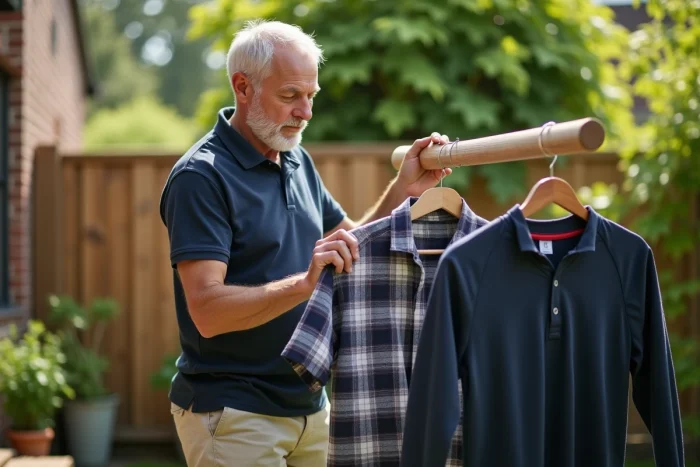
Quick outdoor drying significantly limits the window for bacterial development on the still damp textile. Conversely, slow drying in a poorly ventilated room (or laundry forgotten in the drum) restarts the odor production cycle, even after careful washing.
Storage conditions to monitor
Storing sportswear that is still slightly damp in a closed bag or laundry basket without ventilation creates an ideal environment for bacteria. The time between the end of physical activity and washing also matters: the longer a garment remains damp and confined, the more odors become permanently entrenched.
Some concrete reflexes significantly reduce the problem:
- Hang or suspend the garment immediately after the activity, even if washing is not planned until the next day
- Remove laundry from the machine within minutes after the cycle ends
- Prefer air drying rather than indoor drying, especially for synthetic textiles that dry quickly but retain moisture on the surface
The persistent smell of sweat on clothes after washing is not a foregone conclusion. The mechanism is based on a combination of factors: fiber nature, bacterial flora, drying, and storage conditions.
Enzymatic pre-soaking remains the best-validated approach according to independent tests, provided that drying habits are also reviewed and fabric softener is limited on synthetic textiles.