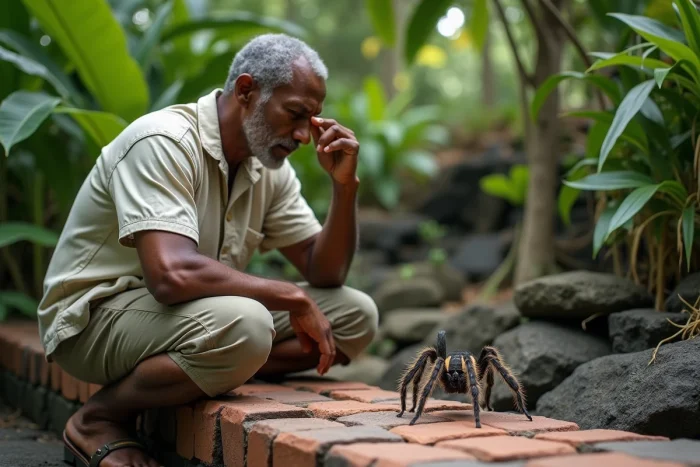
80% of Reunionese people have encountered a babouk without even realizing it. The giant spider, sometimes feared and sometimes respected, has carved out a prominent place in the collective imagination of the island. Between persistent rumors, childhood tales, and avoidance strategies, the babouk finds its way into discussions as much as into the corners of homes.
Some species, grouped under this popular name, turn out to be surprisingly different upon closer inspection. Size, color, habits: nothing is really uniform, which complicates identification and perception of danger. The recommendations from specialists are consistent: observe, understand, but do not seek extermination at all costs.
Babouk in Reunion: who is this impressive spider really?
As night falls, the babouk settles on walls, in gardens, or under beams. It mainly belongs to two species: Heteropoda venatoria and Olios lamarcki, locally known as babouk la cour. What do they have in common? A massive appearance, endless legs, and a speed that commands respect. Their presence can be surprising, even frightening, but these hunters are far from being mere intruders.
The babouk plays a discreet yet useful role in the Reunionese home. It regulates the population of mosquitoes, cockroaches, and other unwanted insects, without ever bothering to spin a web. Its strategy: to roam dark corners and pounce on its prey. This adaptability allows it to colonize both homes and gardens, from urban areas to the edges of the forest.
On the island, this spider is not limited to its utilitarian aspect. Many see it as a protective symbol, even a good luck charm. Children learn to spot its unique silhouette and not to confuse it with other more discreet species, sometimes feared for the wrong reasons.
Its impressive size sometimes raises concerns, particularly in the event of a bite. However, the bite of the babouk in Reunion causes little more than minor pain, akin to a bee sting: a redness, a bit of itching, nothing more. A simple cleaning is sufficient in most cases. To learn more about cohabitation or to adopt the right reflexes, consult “Babouk at home: Understand and manage its presence – Animalya”. The presence of different species reminds us that each spider plays a role in the ecological balance, contributing to the control of harmful insects.
What are the real risks of bites and how to recognize the species present?
The babouk, despite its size, is not on the list of dangerous spiders in Reunion. The few recorded bites are similar to a bee sting: a fleeting sensation, a bit of redness, and then everything returns to normal. No cases of serious complications have been documented in healthy adults.
The real subject of caution concerns another species: the bibe, also known as the brown widow (Latrodectus geometricus). Its venom, more active, can cause latrodectism with muscle pain, cramps, or even digestive or cardiac issues. This syndrome remains exceptional but requires prompt medical attention. It can be recognized by its tangled web, found in dark areas, often close to the ground or under furniture.
To differentiate the most common species, here are some criteria to observe:
- Babouk (Heteropoda venatoria): wide and flattened silhouette, long legs, brown-beige color, rapid movements, absence of web.
- Golden orb weaver (Trichonephila inaurata): yellow-gold abdomen, spectacular golden webs outdoors, completely harmless.
- Wolf spiders (Lycosa): stocky appearance, brown or gray hues, hunt on the ground without threatening humans.
- Bibe: small, spherical brown abdomen, thin legs, chaotic and dense webs.
Incidents related to spider bites on the island most often come from harmless species. To prevent this, it is usually sufficient to spot, identify, and, in case of anomalies, consult a healthcare professional.
Practical tips to limit encounters and react calmly
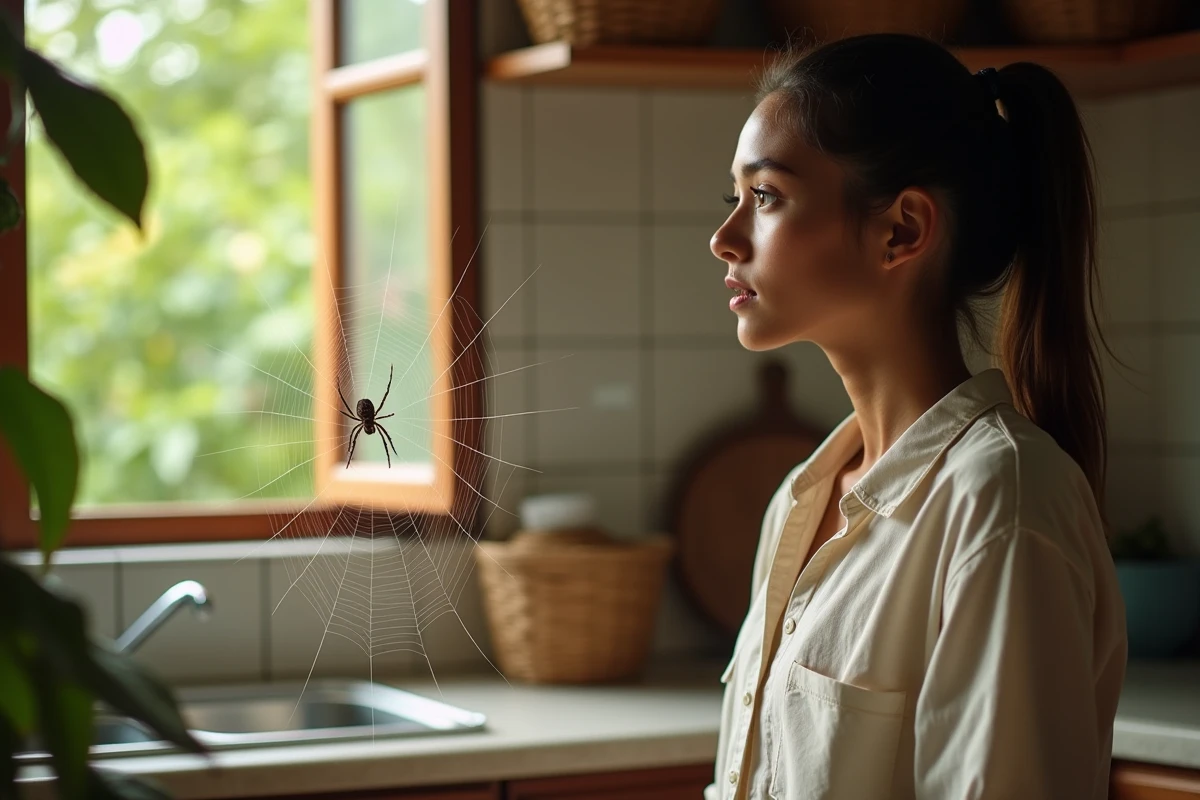
The rainy season, from November to April, sees a significant increase in spider activity, including the babouk. To limit their presence indoors, a few simple actions can make a difference. Ventilate often, avoid letting objects or boxes accumulate in dark corners, and regularly maintain the surroundings of the house: tall grasses and piles of wood provide appreciated refuges.
Also consider vacuuming along baseboards, on window sills, and under furniture. The babouk seeks tranquility: a disturbed space discourages it from settling. Some opt for natural repellents such as lavender or peppermint essential oils, which disrupt its establishment without impacting the fragile balance of beneficial insects. Keep in mind that the babouk contributes to home protection by limiting invasive insects.
If a bite occurs, a quick disinfection and a bit of patience are almost always sufficient. In case of unusual symptoms (muscle pain, malaise, intense reaction after a suspicious bite), it is recommended to contact the University Hospital Center of Reunion or the poison control center in Marseille without delay. Rather than crushing the spider, capture it with a glass and a piece of paper, then release it outside: a simple gesture that preserves biodiversity while alleviating fears.
The babouk may not be the guest one expects, but it commands respect. Its discretion, utility, and the plurality of beliefs surrounding it make it a discreet emblem of daily life in Reunion. The next time a hairy silhouette crosses a wall at dusk, look at it differently: it may be the silent guardian of your nights.