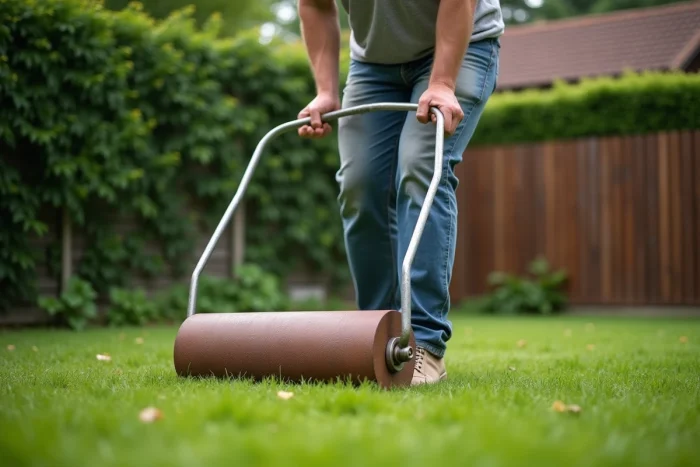
A poorly chosen roller is the promise of a lawn that disappoints as soon as the first sunny days arrive. Too light, it leaves the ground uneven, the grass floats, and irregularities settle in. Too heavy, it’s a different story: the soil suffocates, young roots struggle to grow down, and the slightest excess water becomes a trap for the grass. Between these two extremes, the reality of the terrain imposes its rules. The nature of the soil, the variety of grass, and the moisture at the time of rolling all require tailored attention.
To ensure a uniform, resilient lawn that feels good underfoot, it’s essential to get the weight of the roller just right. Certain technical criteria help make the right choice, so that rolling becomes a true optimization gesture, not a gamble.
Understanding the impact of the roller on the success of your lawn
The lawn roller is far from a gadget: its use marks the birth of a well-laid lawn. After unrolling a sod or sowing seeds, the roller flattens, gently presses down, and ensures that every blade of grass adheres to the soil. The pressure it exerts, when well-balanced, eliminates air pockets, ensures root establishment, and levels the surface. Too little pressure? The grass floats, and the roots struggle to anchor. Too much pressure? The young shoots get crushed, the soil compacts, and the lawn starts off poorly.The ideal weight for a lawn roller depends on concrete variables: soil composition, moisture, variety of natural grass, and the time of season. Experience shows that for clayey or heavy soil, a roller between 60 and 80 kg is preferable, enough to level without turning the earth into concrete. On sandy soil, it’s better to stay within the 30 to 50 kg range: this is sufficient to secure the grass without unnecessary compaction. The choice of weight also matters during repeated passes: after the first watering or when laying new rolls, the goal is not to crush but to support the establishment.
Here are the suitable uses for each type of roller:
- For sod: an intermediate roller provides a clear, immediate result without forcing the soil.
- For seeding: a light roller is enough to adhere the seeds without degrading the soil structure.
Success also relies on mastering the technique and the ability to adapt your method to weather conditions. Mild temperatures, soil neither waterlogged nor hard as stone: this is the ideal terrain to intervene. Achieving a dense lawn that withstands foot traffic and remains beautiful all summer requires a combination of well-adjusted equipment, soil observation, and small corrections over time.
What weight to choose for a lawn roller according to your terrain and needs?
The choice of the lawn roller weight is based on a concrete analysis of your terrain. There is no miracle recipe: one must adapt to the soil, the use, and the moment. On clay soil, heavy and compact, aim for between 60 and 80 kg. This weight allows for solid contact between the sod and the soil while avoiding air bubbles. On sandy soil, delicacy is key: a roller of 30 to 50 kg is preferable to avoid disturbing the lightness of the substrate.
When it comes to seeded grass, the first pass is done with a roller of 30 to 40 kg: just enough to secure the seeds to the soil without hindering germination. Conversely, for laying sod, the goal is to anchor quickly without causing excessive compaction.
Here are some guidelines to adjust the weight according to the reality of the terrain:
- Clayey, moist soil: 70 kg for effective leveling without excessive compaction.
- Sandy, dry soil: 40 kg maximum to respect the light structure of the soil.
- Intermediate terrain: between 50 and 60 kg, enough to ensure density and uniformity.
The choice also varies depending on moisture levels, grass type, and the season. Soil that is too wet requires caution, while overly dry soil demands more pressure. Adjustable rollers (to be filled with water or sand) are valuable allies for adapting the weight to the current situation.

Tools, tips, and alternatives for flawless installation and maintenance
The lawn roller is an effective tool, but it requires a real method. First and foremost, carefully prepare the terrain: break up the soil, level it, and remove stones and roots. This preparation facilitates a solid rooting of the grass, whether seeded or in rolls.
Here are some essential practices for successful installation and maintenance:
- Conduct a regular seeding, then roll in two different directions to ensure each seed is in contact with the soil.
- If laying sod, intervene immediately after installation: the roller eliminates air bubbles and ensures rapid root establishment.
- Remember to adjust the roller weight to the conditions: the soil should remain soft, never waterlogged.
For maintenance, consistency is key. The first lawn mowing should wait until the blades reach 8 to 10 cm. Use a sharp blade, cutting a maximum of one-third of the height. Watering should be generous at first, then adjusted according to the weather to support rooting.
If you’re looking for alternatives, a hand roller filled with water offers interesting flexibility: it adjusts as needed. Alternatively, a large weighted board, pulled slowly, can work in a pinch to compact a seeding. However, nothing matches the precision of a dedicated roller designed for natural grass and the requirements of each garden.
Choosing the right weight gives the lawn every chance: each pass of the roller shapes the future of the garden. In the end, it’s the lawn that tells the story: supple, dense, without marks or bumps, it reflects a thoughtful choice and a precise gesture.