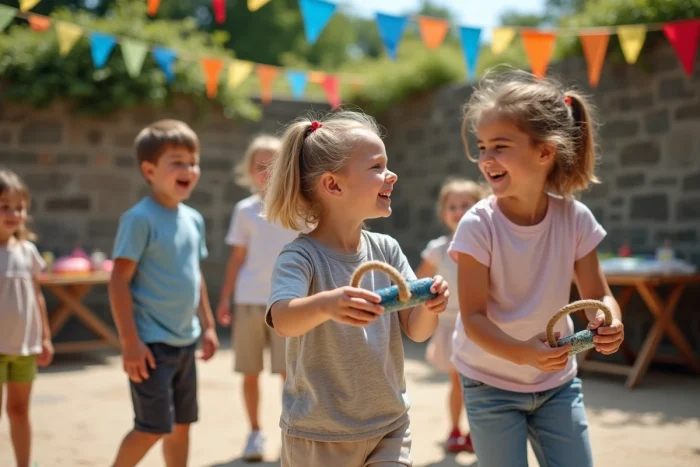
In some establishments, the obligation to limit spending on school parties comes with a formal ban on purchasing new games. Yet, the demand for renewing activities does not wane from year to year.
Recycling materials and crafting homemade activities then emerge as an effective alternative. Simple and inexpensive solutions allow for the creation of attractive games suitable for all ages, while showcasing collective ingenuity.
Why focus on recycling for a more creative and responsible fair?
Gone is the race for new items off the shelves: the idea workshop is located in the room of forgotten objects. A fair organized around recycled materials shakes up the rules of the game. Dented cans, plastic basins, and cardboard rolls pile up in a corner… before becoming the stars of the day. Parents, teachers, facilitators: every participant finds a space for expression where they can invent and craft together, without opening their wallets wide.
We don’t just recycle; we reinvent. Everyone digs out what’s lying around in the cupboards: a worn rope, an old sheet, a few stacked bottles. These little bits and pieces become sources of imagination, and even more, a pretext for cooperation. Children discover that they can laugh at a basin turned into a fishing pond, a fabric repurposed into a shopping bag, or a pyramid ready to collapse made of simple metal cans, all without spending a dime.
This mode of organization cultivates the idea of transmission. Families are involved, students are given the responsibility of sorting and creating, relying on ingenuity. To overflow with ideas and rely on practical advice, check out Le Petit Blog de Maman to see how a knockdown game is built from cans, how a bowling game is born from mismatched bottles, or how obstacle courses emerge from an organized collection. Nothing is wasted; everything transforms into a game or a booth, in a collective dynamic.
Much more than just entertainment, this choice demonstrates that we can have fun differently. Children get used to creating rather than consuming, and adults find satisfaction in shared success. The atmosphere changes, the celebration takes on another dimension, where the desire to do things together outweighs the temptation to buy new.
Which homemade games are most popular with children?
Nothing can compete with the joy of a homemade knockdown game or the bursts of laughter caused by a makeshift ring toss on a corner of the table. The fair games made on-site gather children around simple and friendly challenges, where everyone tries their luck freely. The flexibility of the rules and the ease of setup make these games must-haves for the big day.
Among all those imagined, some are particularly successful:
- The duck fishing game, recycled version, where a simple basin is filled with collected bottle caps or small ducks.
- The sack race with old sewn sheets, a classic that never fails to trigger laughter and agility contests.
- And the cardboard obstacle course, ideal for transforming any yard into a cooperative adventure ground.
You can also find hopscotch drawn with chalk, a revived jump rope, or marbles dug out from the bottom of drawers. Even the bowling game reimagined with some weighted bottles, or tug-of-war with an old string, creates moments of authentic sharing. There’s nothing stopping you from adding some riddles or a speed challenge to spice things up.
Why are these homemade games so appealing? Because they leave plenty of room for improvisation, they encourage exchange, and they invite each child to take ownership of the game, to reinvent the celebration in their own way. When everyone gets involved, the atmosphere overflows with creativity, and the fair becomes a symbol of simple, collective pleasure that disregards commercial standards.
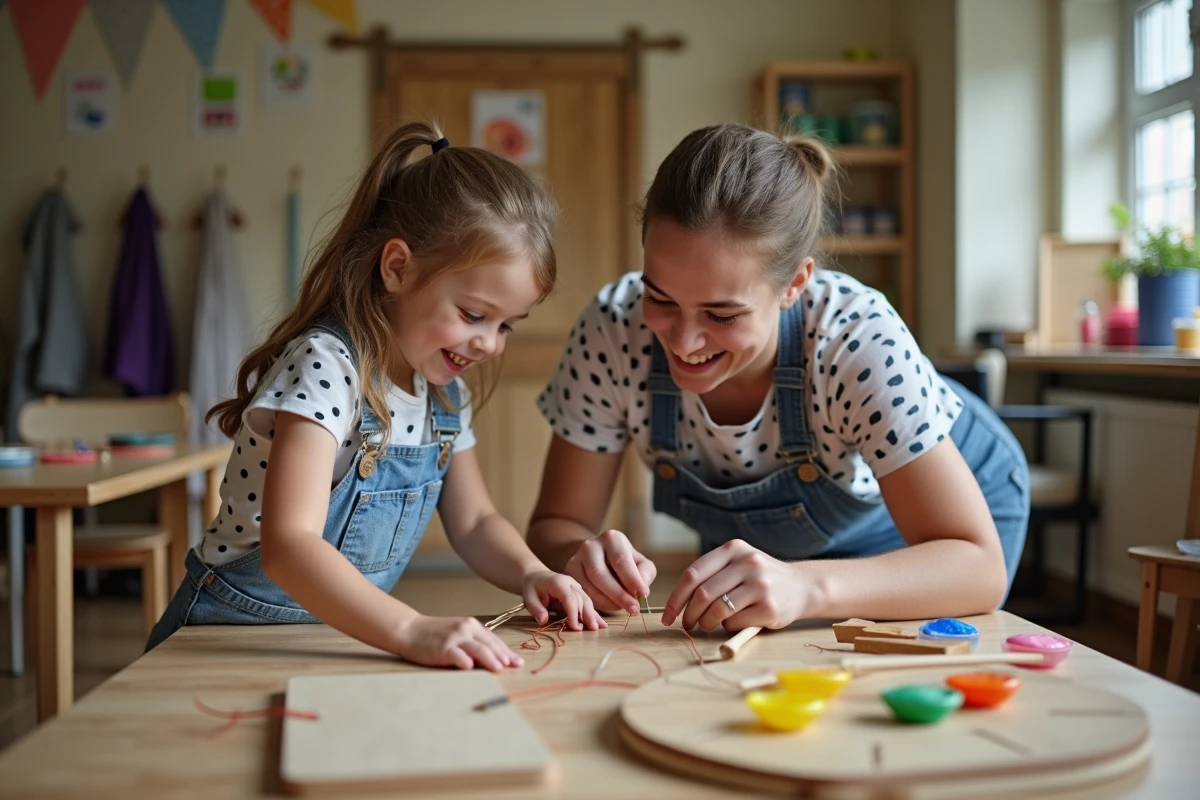
Materials to recycle and practical tips for creating your booths and activities
Creating a creative fair without excessive purchases starts with the collection phase. On the parents’ and organizing team’s side, everyone rummages through their cupboards and prepares a varied selection:
- cans,
- plastic bottles,
- sturdy cardboard,
- old sheets.
Bringing all these materials to life boils down to a few clever ideas: well-washed cans, dressed in colorful paper, serve as a knockdown game. Improvised rings made from rope or adhesive tape, a few weighted bottles to serve as targets, and you have the structure of a successful booth. To vary, markers and slates get a second chance in word or drawing games, adaptable according to the organizers’ inspiration.
The rope becomes a key accessory: used in tug-of-war, three-legged races, or to mark out a course, it structures the space and provokes bursts of laughter. An old wooden tray or a disc found at the back of a garage can be improvised into a mini skill game, like a Breton disc or homemade billiards. Most of the time, crafting with what you have on hand reveals more ingenuity than any purchase.
By approaching the fair through the lens of recycling, we get used to transforming constraints into resources. What seemed destined for the bin finds unexpected utility. Children get excited about the result, authentic and a bit mismatched, and adults realize that together we can reinvent everything, for a celebration full of life, boldness, and memories to build for next year.